
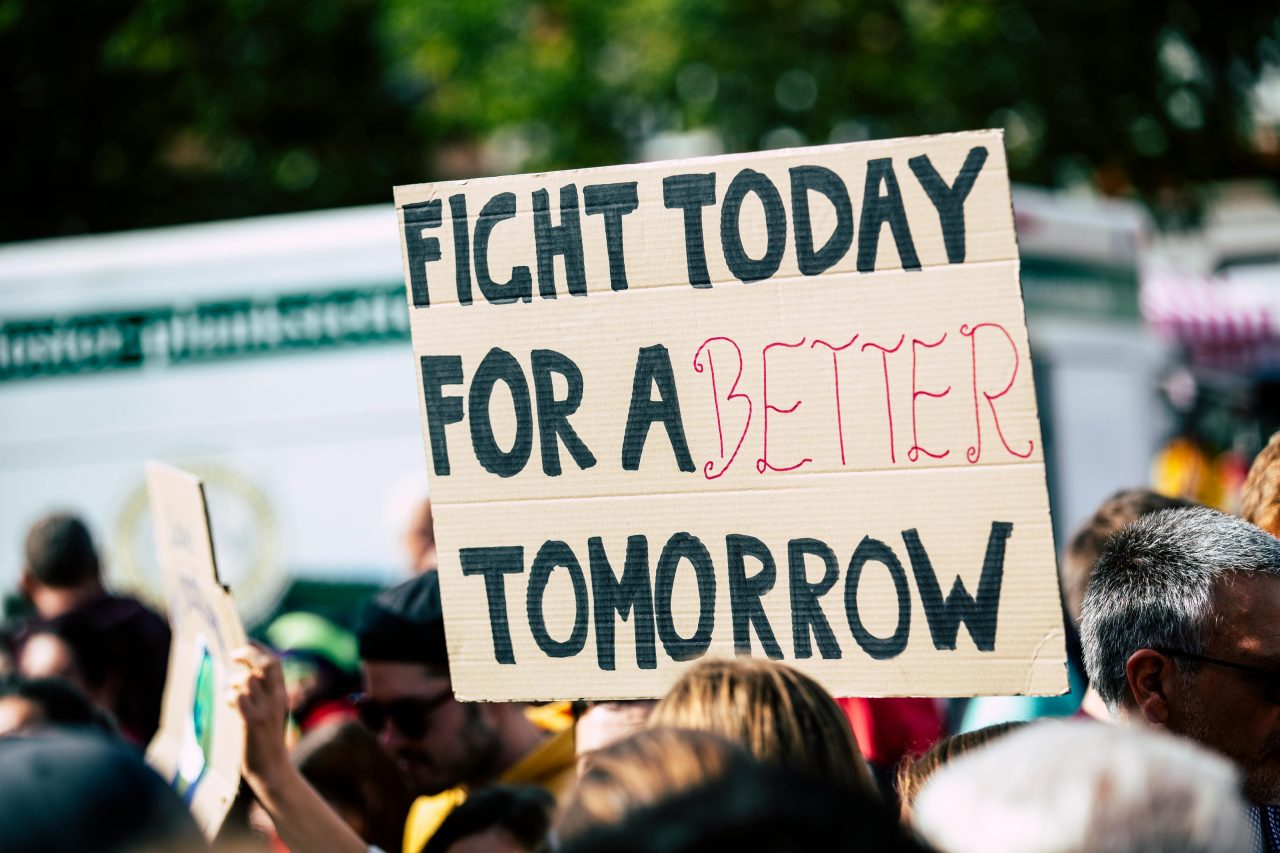
At The Fuze Foundation, promoting Humanism is at the heart of everything we do. Humanism is about living with compassion, equality, and respect for others — values that unite people regardless of belief and guide how we support individuals, families, and communities across Scotland.
In a world increasingly shaped by division, misinformation, and fear, these values feel more important than ever. Recently, I found myself returning to one of the most powerful political speeches of the twentieth century: President Franklin D. Roosevelt’s Four Freedoms address, delivered in 1941 as the United States stood on the brink of war.
Eighty-five years on, the speech feels uncomfortably current. Its warnings about propaganda, the erosion of truth, and the fragility of democratic values invite an unavoidable question: where did we go wrong and what responsibility do we carry now?
1941 with America on the brink of war – Where did we go wrong?
When President Franklin D. Roosevelt delivered his famous Four Freedoms address, the Japanese attack on Pearl Harbor was still eleven months away. Reading it now forced me to reflect on world events today. How much has really changed? Populist political movements are gaining ground, thriving on fear and division. The far right is on the march across Europe, words I never imagined I would be writing.
There is so much to admire in Roosevelt’s speech that at times it left me breathless. Breathless that words spoken nearly a century ago still resonate so powerfully today. He warned:
“The democratic way of life is at this moment being directly assailed in every part of the world — assailed by either arms, or by the secret spreading of poisonous propaganda by those who seek to destroy unity and promote discord in nations that are still at peace.”
Computers, never mind the internet, were decades away, yet hatred, misogyny, lies, and misinformation still spread with alarming ease. They did then, and they are doing so again today. The methods may have changed, but the intent has not.
All of us who encounter these lies have a responsibility to challenge them when they appear – whether in casual conversation in the village, at home, or among friends. I am sure we have all encountered this darkness. Recently, someone I like made a throwaway comment about our bins not being emptied as often because “our taxes are funding immigrants living in luxury hotels.” What?! I couldn’t let it pass. That claim is wrong on so many levels, yet this narrative has become commonplace. Misinformation seeps quietly into people’s thinking, often without them realising it.
I struggle to comprehend that we now live in a world where truth appears not to matter – though perhaps it never fully did. Another line from Roosevelt feels especially ironic today:
“We must especially beware of that small group of selfish men who would clip the wings of the American eagle in order to feather their own nests.”
An American president said this. So who is doing the clipping now?
At the Fuze Foundation, we are a team of people who give our time, love, and compassion to helping others. The team regularly goes above and beyond, supporting families without any remuneration. I remain an optimist. I believe humans are, at their core, good.
To close, I want to return to Roosevelt’s Four Freedoms and ask you to reflect on them, because they are as relevant today as they were 85 years ago:
“We look forward to a world founded upon four essential human freedoms.
The first is freedom of speech and expression — everywhere in the world.
The second is freedom of every person to worship God in his own way — everywhere in the world.
The third is freedom from want — which, translated into world terms, means economic understandings which will secure to every nation a healthy peacetime life for its inhabitants — everywhere in the world.
The fourth is freedom from fear — which, translated into world terms, means a world-wide reduction of armaments to such a point and in such a thorough fashion that no nation will be in a position to commit an act of physical aggression against any neighbour — anywhere in the world.
That is no vision of a distant millennium. It is a definite basis for a kind of world attainable in our own time and generation.
That kind of world is the very antithesis of the so-called new order of tyranny which the dictators seek to create with the crash of a bomb.”
I believe there are millions – if not billions – of us who still uphold these values. But belief alone is not enough. We must speak up. Declaring our human, if not humanist, values and challenging hateful ideologies when they arise is one way of ensuring these freedoms do not become relics of history.
👉 Read more about the speech here: https://en.wikipedia.org/wiki/Four_Freedoms
Next Steps – Turning Values into Action
Roosevelt reminded us that freedom, dignity, and compassion only endure when ordinary people choose to uphold them. Believing in Humanist values is not enough — we must live them.
One way to do that is by helping others remember, honour, and tell their stories in ways that are inclusive, respectful, and rooted in shared humanity.
At The Fuze Foundation, our team works alongside families and communities to create ceremonies that welcome people of all beliefs and none, giving space for truth, remembrance, and connection. By supporting our work — whether by engaging our team, sharing our message, or contributing in other ways — you help ensure that these values continue to be lived, not just spoken about.
If you would like our support, or would like to help us support others, we would love to hear from you.
About the Author

Anne Widdop established The Fuze Foundation in 2012 and remains actively involved in promoting its work and values. A committed Humanist, Anne believes strongly in equality, diversity, compassion, and freedom of expression.
Although she is an atheist, Anne firmly supports the right of every individual to hold and practise their own beliefs. She believes that a fair and healthy society depends on our ability to live alongside one another with mutual respect, even where our views differ.


